Hiking The Narrows in Winter: A Complete Zion National Park Guide
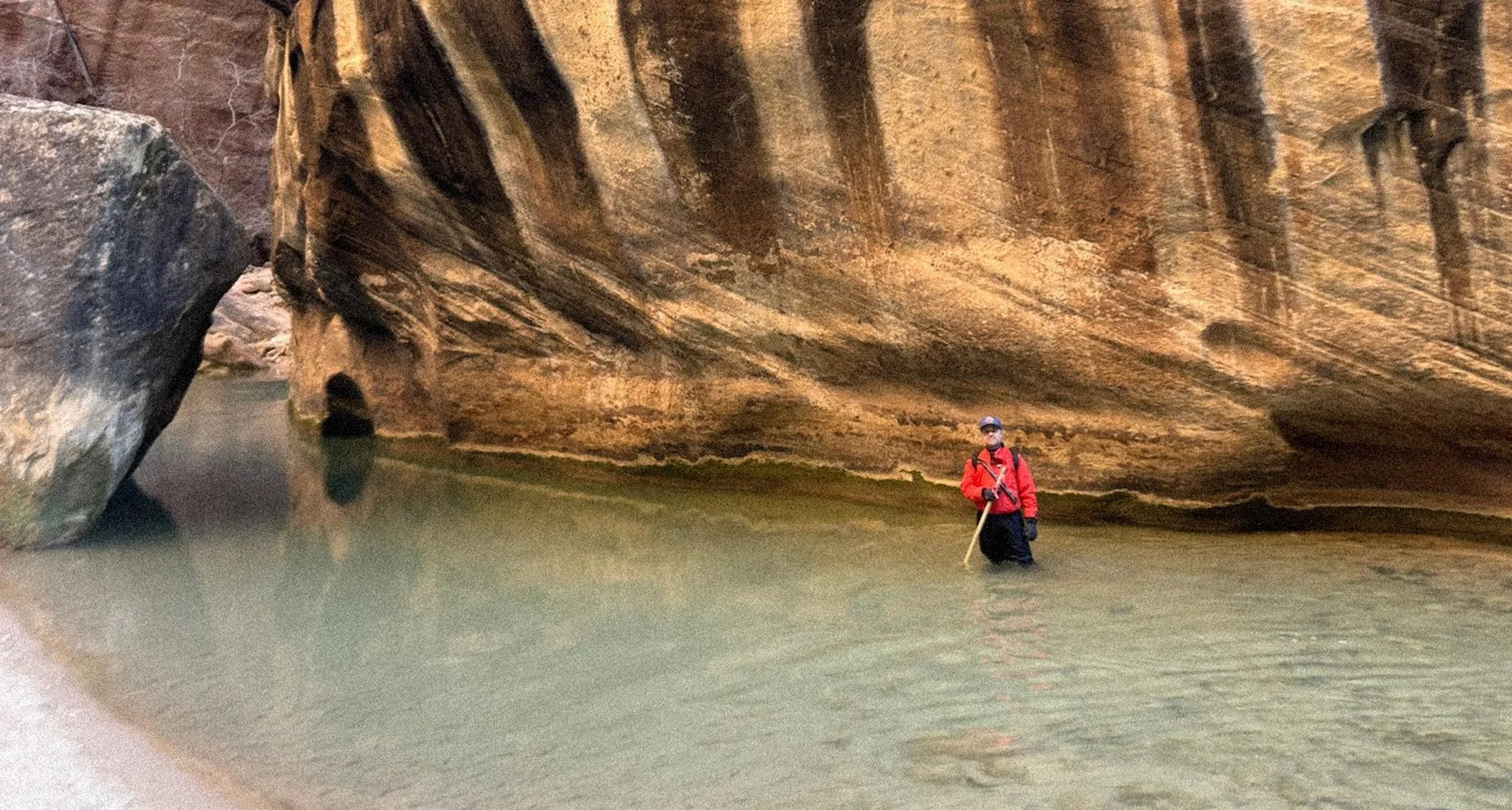
I first hiked The Narrows in winter, and it remains one of my favorite experiences in Zion. The canyon was quiet, the water was cold, and once we were properly geared up, we were able to spend the day working our way upstream without the crowds that define much of the warmer season.
Winter does require more preparation. Water temperatures are cold, daylight is limited, and conditions in the Virgin River can change quickly. For us, that was a worthwhile trade for seeing The Narrows at a much quieter time of year.
This guide focuses on the bottom-up hike from Temple of Sinawava, including winter conditions, gear, river safety and what we learned from doing the hike ourselves.
The Narrows: At a Glance
| Route | Bottom-up from Temple of Sinawava |
| Permit | Not required for bottom-up day hikes |
| Distance | Up to 9.4 miles round trip to Big Spring |
| Difficulty | Moderate to strenuous, depending on river flow and distance |
| Winter Gear | Cold-water protection, closed-toe footwear, warm layers and a sturdy hiking stick |
| Season | Winter offers fewer crowds, but colder water and shorter daylight |
| Turnaround | Big Spring is the upstream limit for bottom-up hikers |
| Check Before Hiking | River flow, weather, flash-flood potential and park closures |
The Narrows in Winter: Fewer Crowds, More Canyon
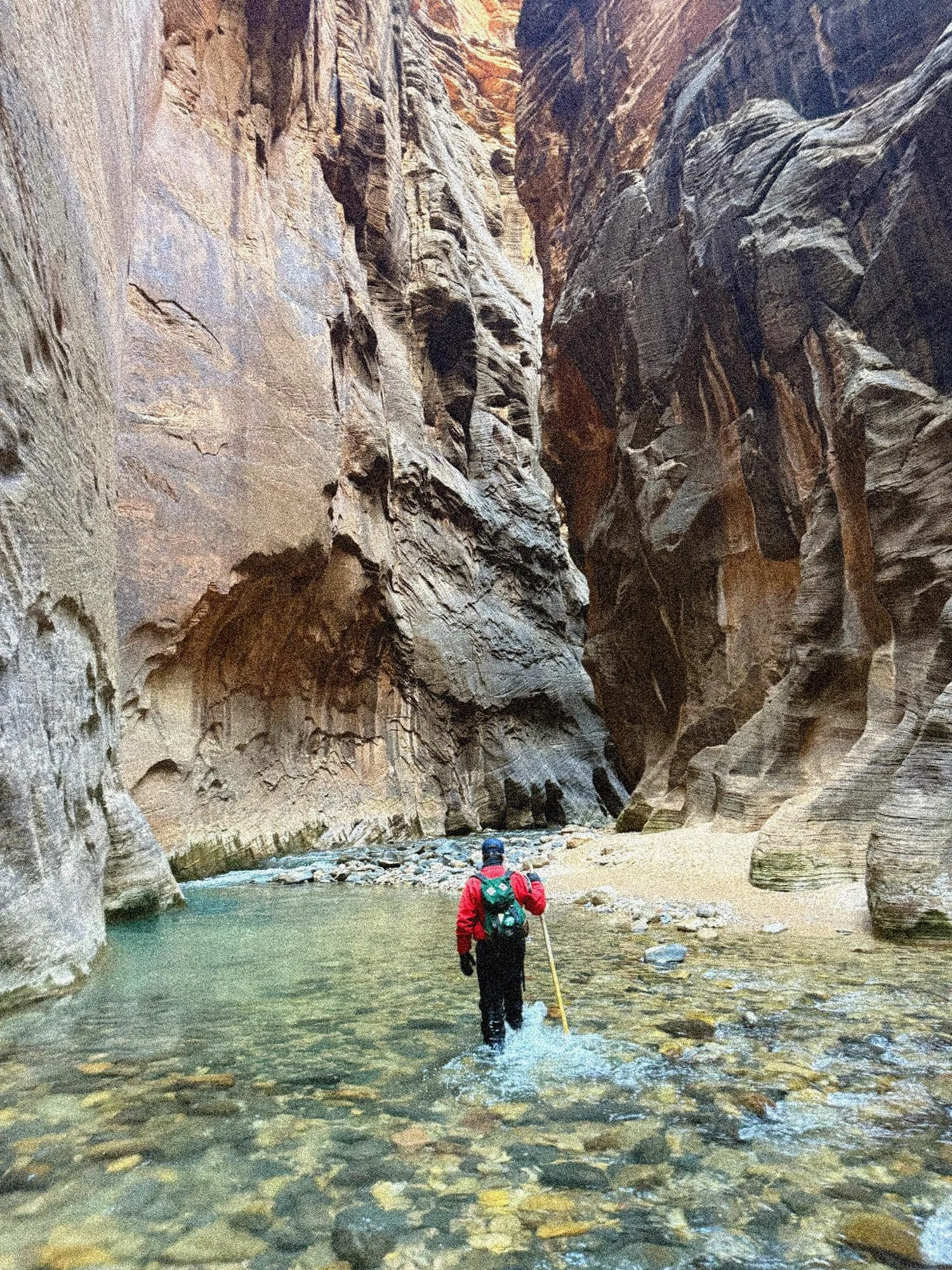
The Narrows is one of Zion’s most popular hikes, but winter can be a very different experience. On our trip, the crowds thinned considerably once we left the Riverside Walk and started upstream. There were stretches of canyon where we had very few other hikers around us.
The colder months come with obvious tradeoffs. The Virgin River is cold, daylight is shorter, and much of the canyon stays shaded. You need to pay closer attention to conditions and carry the right gear, but the cold water was much less of an issue than I expected once we were properly equipped.
Winter also changes the pace of the hike. Since the bottom-up route is an out-and-back, you can decide how far to continue as you go. There’s no need to reach Big Spring for the hike to be worthwhile, especially when daylight and river conditions are working against you.
Gear for Hiking The Narrows in Winter
Winter conditions call for more than standard hiking gear. We were outfitted with equipment from Zion Adventures in Springdale, which offers Narrows-specific footwear, walking sticks, dry bibs and dry suits. For winter hikes, a dry suit is generally their recommended option, with warm insulating layers worn underneath.
The gear made a noticeable difference for us. The canyon shoes provided better footing on the slick riverbed, and the walking stick was useful for both balance and checking water depth before stepping forward. Zion Adventures also monitors river flow and weather conditions, so it’s worth talking with their staff about current conditions when you pick up your gear.
Check Conditions Before You Go
River conditions can change quickly, so check the latest conditions before heading into The Narrows. We recommend contacting Zion Adventures before your hike for current river conditions, flow information and advice on what gear makes sense for the day. It’s especially useful in winter, when water levels, weather and cold temperatures can change what you’ll need.
The National Park Service should also be checked for official closures and alerts. The Narrows closes to bottom-up hiking when the Virgin River exceeds 150 CFS or when the National Weather Service issues a Flash Flood Warning.
Water quality matters too. Toxic cyanobacteria have been detected in the Virgin River, and the National Park Service advises visitors not to submerge their heads or drink river water. Check current park alerts before every hike rather than relying on conditions from a previous visit.
Where We Stayed: Bumbleberry Hotel
We stayed at the Bumbleberry Hotel in Springdale, which made a convenient base for the trip. It’s close to the park entrance and within walking distance of restaurants, coffee and local outfitters, so we rarely needed the car once we were back in town.
Winter rates can also be considerably lower than during Zion’s busiest months. If you’re staying in Springdale, it’s worth comparing rates for your dates rather than assuming that lodging near the park will be expensive.
From Zion

Our Zion artwork grew out of time spent in the park and the landscape of southern Utah—a small reminder of the places that stay with you after the trip.
Continue Reading