After the Last Chair
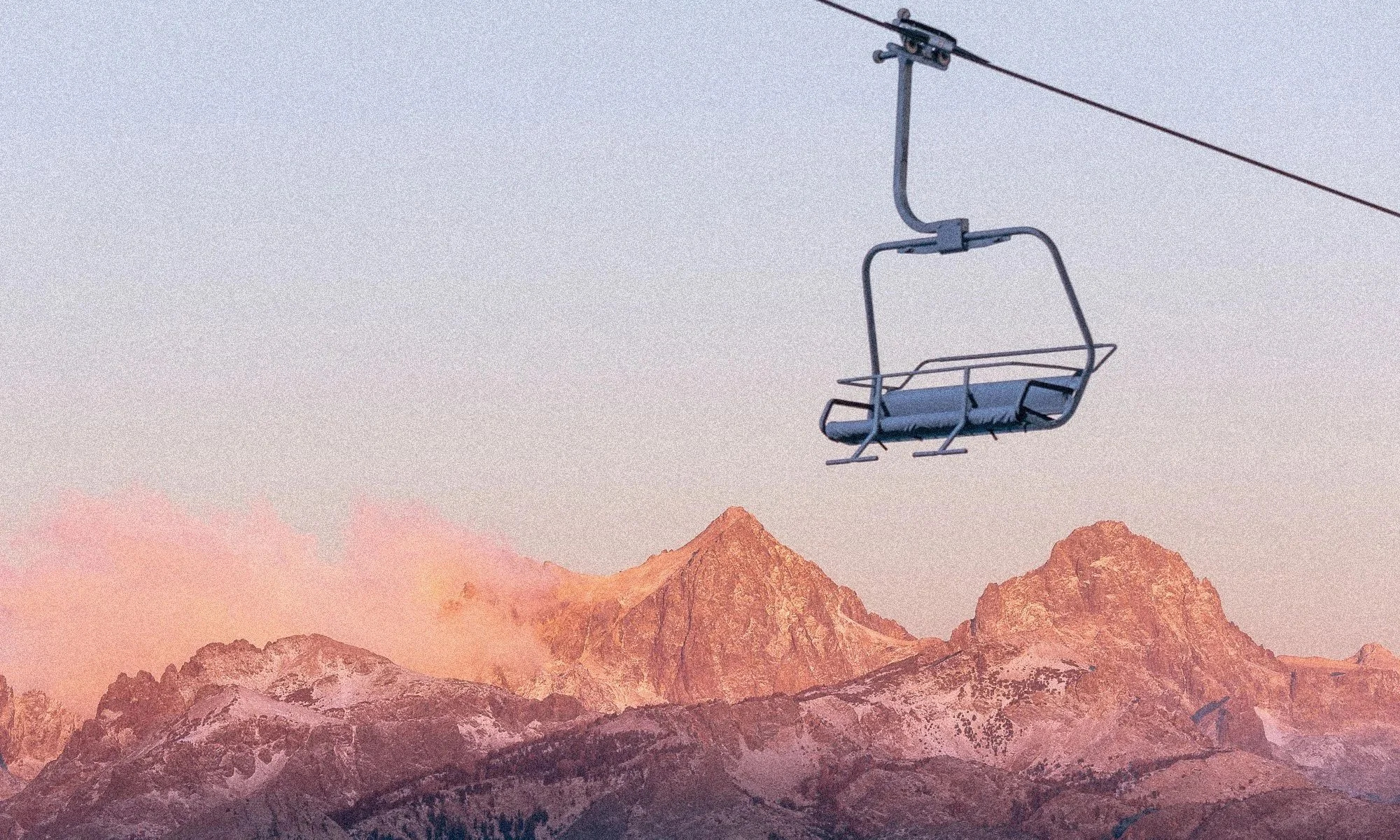
Credit: Mammoth Lakes Tourism
Après-Ski and the Making of Mammoth
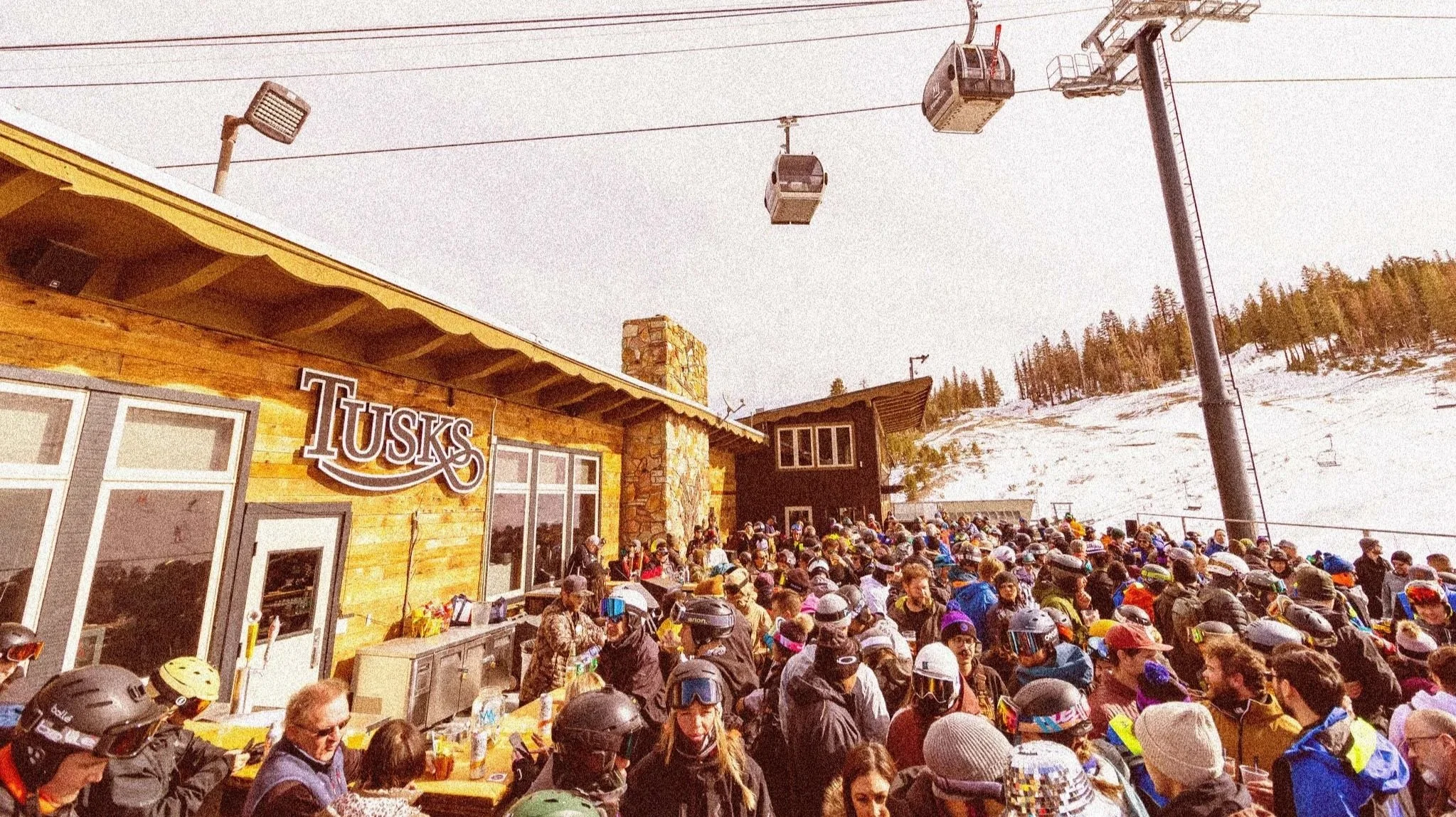
On winter weekends at Canyon Lodge, the end of the ski day has begun to look increasingly familiar. Music comes from an elevated gondola cabin while skiers crowd the sundeck in helmets and boots, drinks moving across the Lincoln Bar as the lifts finish turning above them. On bigger weekends the resort brings in touring performers and sponsors; champagne showers, giveaways and a reserved VIP area push the afternoon closer to a produced event than the loose end of a ski day. Mammoth Mountain now promotes the gathering as one of America's best après-ski parties, with programming deliberately scheduled to begin while much of the mountain is still skiing.[1]
There is nothing strange about a major resort wanting a good party after skiing. Après has become part of the business of the sport, promoted alongside terrain, snowfall, hotels and restaurants as another reason to choose one mountain over another. What makes Canyon interesting is its location in a town that has spent decades wrestling with what happens after the lifts close.
For more than seventy years, Mammoth has been one of the defining ski mountains of the American West, with a following large enough that generations of Southern Californians have organized their winters around the long drive north on Highway 395. Yet the town has rarely occupied the same place in the mythology of après as Aspen, Park City, Vail, Jackson Hole or the European resorts where the ski day seems to dissolve almost automatically into the social one.
The usual explanations are too simple. Mammoth Lakes did not grow up without nightlife, and condominiums did not arrive one winter and sweep an older culture away. The historical record shows a vigorous public scene continuing well into the years when second-home development was transforming the town. The more consequential difference was spatial. As Mammoth Lakes grew, social life spread among bars, restaurants, shopping centers, private condos and several points of access to the mountain rather than collecting around one enduring public center. By the time planners and resort developers began trying to reverse that fragmentation, the habits surrounding a Mammoth weekend had been forming for decades.
When the Ski Day Kept Going
The word après-ski is French, although the modern mythology surrounding it owes plenty to Austrian skiing, where the social end of the day became physically integrated into the descent from the mountain. St. Anton am Arlberg still promotes some of its best-known après institutions, including MooserWirt and Krazy Kanguruh, as bars directly on the slopes.[2] Skiers encounter one another before the day has time to break apart. No one needs to return to lodging, change clothes, get into a car or negotiate a second plan.
American resorts developed their own versions of that continuity. Some inherited streets, hotels and bars from towns that existed before skiing became the dominant economy. Others deliberately built gathering places beside the lifts. The circumstances varied, but the institutions that became synonymous with après generally benefited from repetition: skiers finishing the day in roughly the same place, following roughly the same path and encountering the same establishments winter after winter.
Mammoth began with a different arrangement. The mountain came first. The town that grew below it would eventually have plenty of places to eat and drink, but they did not develop around a single inherited Main Street or base village.
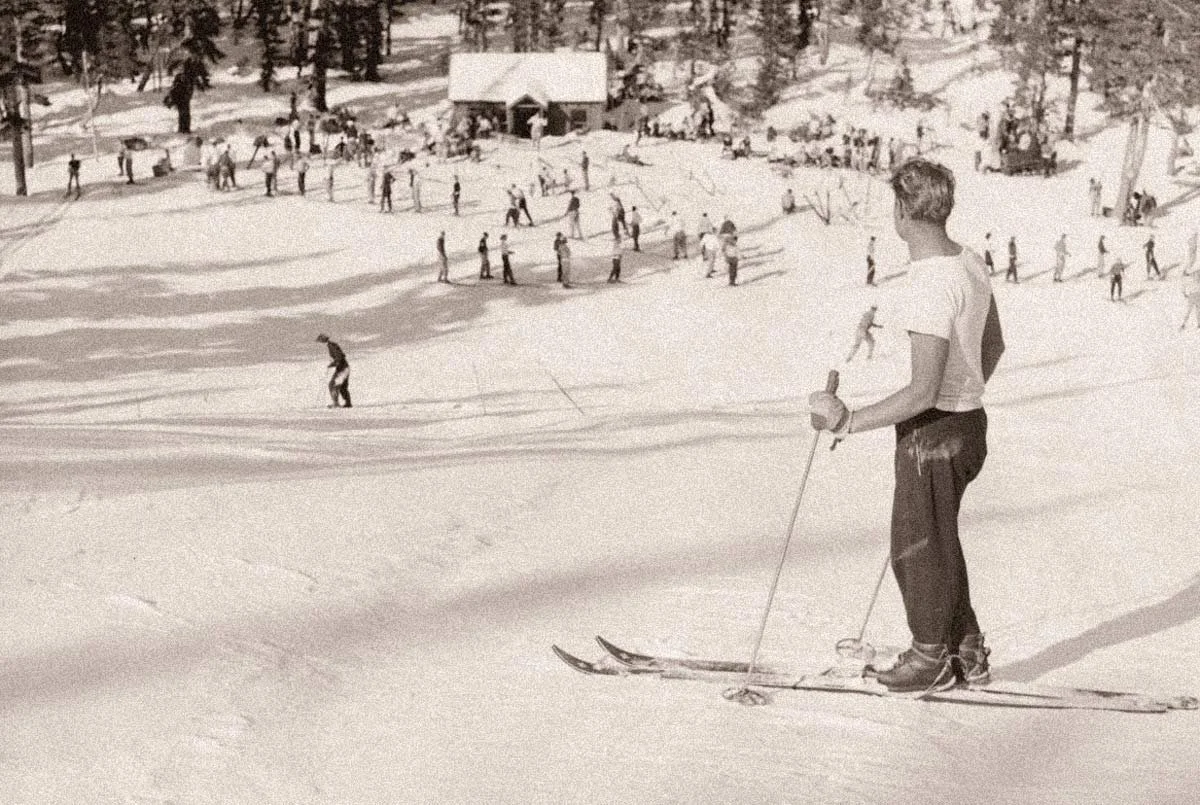
Dave McCoy at Mammoth Mountain - Credit: Mammoth Mountain
Before the Condos Took Over the Story
Mammoth Mountain's origin story is appropriately rough-edged. Dave McCoy developed skiing in the Eastern Sierra after World War II, building from rope tows and improvised equipment toward a permanent resort that opened in 1955. By the mid-1980s the mountain was receiving roughly 1.4 million skier visits a year, a remarkable success for a place whose surrounding town remained considerably less polished than many of the destination resorts beginning to compete with it.[3]
The social world that accompanied that growth was livelier than Mammoth's later reputation would suggest. Sam Walker, a longtime Eastern Sierra restaurateur and businessman who became involved with Mammoth's bar and restaurant economy during the 1960s and early 1970s, remembered a sharp distinction between Bishop and Mammoth Lakes. Bishop depended heavily on local customers; the resort town was more tourist-driven and supported a stronger nightclub and drinking culture. “The nightlife was huge in Mammoth,” he recalled.[4]
Walker later pointed to second-home ownership and a wealthier clientele when asked what had changed. His explanation reflects the view of someone who participated in the earlier restaurant economy; the chronology complicates any direct cause-and-effect version of the story.
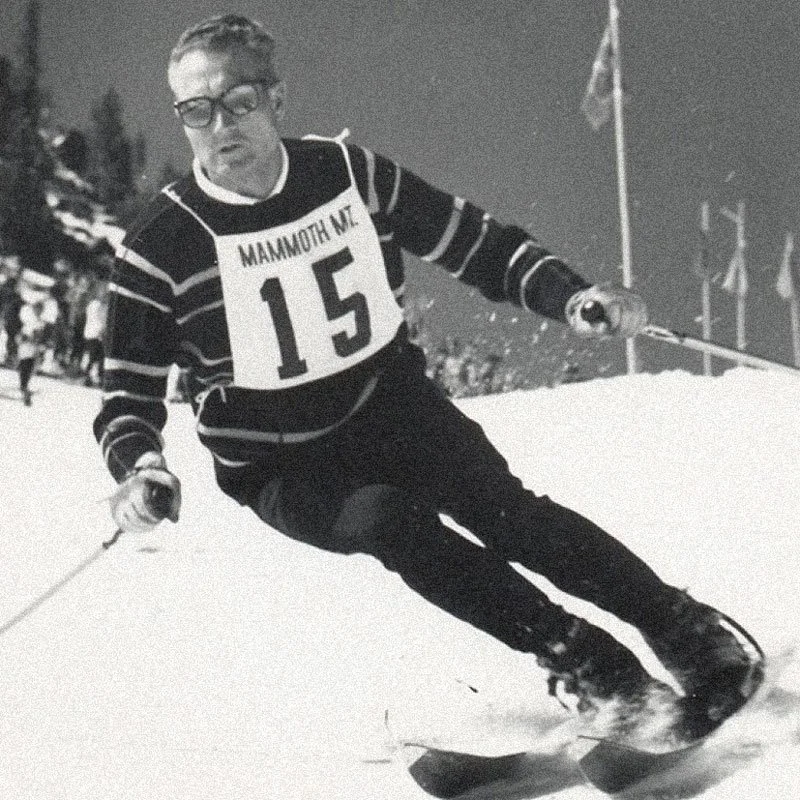
Dave McCoy - Credit: Mammoth Mountain
Whiskey Creek is part of the complication. By 1992, the Los Angeles Times described the Mammoth restaurant as “still going strong after 20 years,” placing its beginnings in the early 1970s.[5] It grew beyond a steakhouse into a bar and live-music venue that remained part of local nightlife into the next century.
Other establishments belonged more clearly to the people who lived and worked in town. When poor snow devastated the Christmas season in 1986, the Times found a veteran ski instructor nursing a drink at Grumpy's, “a hangout for local workers.” Mammoth Mountain ordinarily employed around 1,500 people during ski season. During the snow drought, Whiskey Creek had laid off 80 employees; Walker told the paper that a restaurant accustomed to serving roughly 400 meals a night was serving closer to 175.[6] The bad season inadvertently provided a snapshot of the social and economic machinery operating beneath the resort.
Two winters later the snow was back, and so were the crowds. Mammoth was handling around 16,000 skiers a day during the holiday period. In the evenings, the Times reported, they congregated at Whiskey Creek and other restaurants and watering holes around town.[7]
By then condo development was hardly new. Private lodging and public nightlife were thriving side by side.
The balance between them would change more slowly. New ownership patterns worked through the town over years—through property values and rents, through the customers businesses came to depend on, and through the routines visitors developed once a Mammoth weekend increasingly came with its own kitchen, living room and place to gather.
Los Angeles in the Mountains
The relationship between Mammoth and Southern California is difficult to understand through distance alone. Los Angeles is far enough away that reaching the mountain requires a commitment, yet close enough for the trip to become routine. People joined ski clubs, rented the same units, returned with the same friends and eventually brought children of their own. A destination gradually became familiar.
The numbers by 1991 show how lopsided that relationship had become. About 5,200 people lived permanently in Mammoth Lakes, but on peak winter weekends the population could approach 30,000. Mammoth Mountain had been recording more than a million winter skier visits annually since 1988. The town's North Village environmental report estimated that almost 90 percent of visitors came from Southern California counties.[8]
On the busiest winter weekends, the population could swell to nearly six times its year-round size.
Its housing stock accommodated that rhythm. By 1986, Mammoth Lakes contained roughly 2,500 condominium units, and more than half of its residential property belonged to owners whose primary residence was elsewhere.[9] The market had already experienced a speculative cycle. Units that sold for roughly $40,000 to $50,000 in the early 1970s could command around $110,000 by 1980 before values fell during the real-estate slump that followed.[10]
The numbers describe more than growth. They describe a large population with a sustained relationship to Mammoth but a different relationship to daily life there: people who might know the mountain intimately, recognize restaurant owners and return for twenty winters while still spending most of the year somewhere else.
The long drive reinforced the pattern. Friday night meant heading north; Sunday meant going home. In between, the condo offered something increasingly close to a private lodge.
When the Condo Became the Lodge
A condominium is exceptionally effective ski infrastructure. It offers a kitchen, living room and enough space for a group to remain together, often with a fireplace or hot tub nearby. Groceries and drinks can be bought once. Children can fall asleep down the hall. Wet gloves can dry overnight without anyone arranging a ride home.
For people arriving after hours on Highway 395, the arrangement made repeated weekends easier and allowed a rented or owned unit to accumulate the familiarity of a second home. But convenience only explains part of its appeal.
Living in Mammoth and visiting it also create different social circumstances. A lift operator, ski instructor or restaurant employee finishes the day in the place where ordinary life is already happening: coworkers are nearby, friends live elsewhere in town, and tomorrow is another workday. A visiting family or group of friends has usually arrived under very different conditions.
They have driven five or six hours with friends, children, relatives or another family. The people they came to spend time with are frequently the same people sharing the condo.
That changes the meaning of staying in. Cooking dinner after a workday at home may feel routine. In Mammoth, after a day on the mountain, the same meal can become part of the trip. Boots are piled near the door. Someone starts dinner while somebody else opens a beer or a bottle of wine. Children move between the table and the television. Runs that lasted a few minutes on the mountain get replayed for much longer in the living room.
For a group with only two or three nights in town, there is no assumption that the evening needs to lead somewhere else. Going out can mean giving up some of the limited time everyone traveled to Mammoth to spend together. The condo is not necessarily where the group retreats after the social part of the day. Often it is where that part of the day continues.
By 1997, the Los Angeles Times was describing the outward result. Experts ranked Mammoth among the best ski mountains in North America, while the town received mediocre resort ratings for limited nightlife, a lack of major hotels and relatively few upscale amenities. Winter weekends could fill with Southern Californians who owned or rented condos and then spent the evening inside them.[11]
Eight years later, a Times editorial reached for a local joke: “Vons supermarket was the social center of town.”[12] The editorial was sharply opinionated about development, but the joke recognizes a ritual familiar to generations of visitors. A Friday-evening grocery run could supply everything needed for the nights ahead.
From the outside, that activity disappears. Dinner with friends, children asleep down the hall, beers around a fireplace or in a hot tub do not register in an account of local nightlife. Yet the relationships formed in those rooms can be every bit as durable as the ones formed around a bar.
The same visitors who appeared to be absent from Mammoth's nightlife might, in fact, be doing exactly what they came to Mammoth to do: spending a few uninterrupted days together.
For restaurants and bars, that made private lodging a peculiar competitor. Its attraction was not simply that it was cheaper or more convenient. It offered a social experience that was already complete.
A Town Without a Center
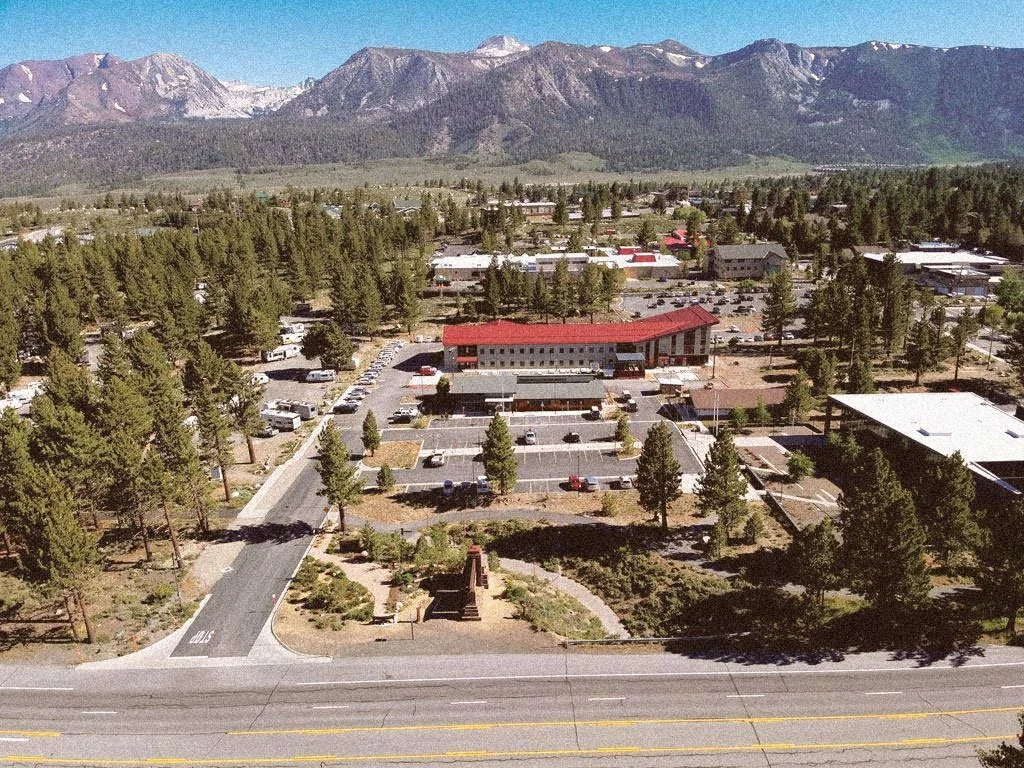
Mammoth Lakes, 1998. Photo: S.R. Brantley, U.S. Geological Survey. Public domain.
Private lodging explains only part of the change. The physical development of Mammoth Lakes was pulling public activity apart at the same time.
In 1981 and 1982, Mammoth Sierra, Minaret Village and Old Mammoth Mall were built almost simultaneously, adding around 185,000 square feet of leasable commercial space to a town where retail space had previously been scarce.[13] The timing proved poor. The economy weakened, merchants struggled and Mammoth Sierra eventually went through bankruptcy proceedings.
What those projects left behind was a particular urban form. Restaurants, shops and gathering places accumulated in separate commercial centers connected by roads and parking lots. No single downtown was absorbing them.
A decade later, Washington Post travel writer David Wallis arrived and described Mammoth Lakes as spreading around the mountain “like a Los Angeles suburb.” Après destinations were scattered among malls and along busy roads rather than clustered around a center comparable to Aspen or Park City's downtown. “You really do need a car to get around,” he wrote.[14]
Wallis was describing the town in 1991, before the Village, before Hyde Lounge and long before the current Canyon parties. Mammoth already had crowds, restaurants, and longstanding bars. What it lacked was a physical structure that repeatedly brought those crowds together.
Even the ski mountain dispersed them. Main Lodge, Canyon Lodge and Eagle Lodge release skiers into different parts of town. From there, the evening can splinter quickly: one group drives home, another stops at the store, another meets friends at a restaurant, another heads elsewhere for drinks. The choices are ordinary. Their cumulative effect is fragmentation.
The weekend population made the economics equally uneven. The same town that could approach 30,000 people at a winter peak returned to a permanent population near 5,200.[8] Saturday night and Tuesday night belonged to different Mammoths, while the businesses serving them paid rent through both.
By the 1990s, the public après scene was dispersed among longtime bars, worker hangouts, restaurants, shopping centers and several mountain portals, with a parallel social world taking place inside private lodging. That history makes the comparison with older ski towns less about which places understood après and more about the environments in which their traditions developed.
Why Aspen, Park City and Vail Feel Different
Aspen had a town long before modern skiing became its economic engine. When Aspen Skiing Corporation formed in 1946 and Lift 1 began operating, the emerging ski culture occupied streets, hotels and commercial buildings left by the mining era.[15] Skiing entered an existing town.
Park City's transition was less seamless. Treasure Mountains opened in 1963 as the mining economy was declining, bringing visitors, businesses and young ski workers into a community with its own established social order. Park City Museum's history describes longtime mining families and younger newcomers living in different parts of town and frequenting different bars. The ski workers—sometimes dismissed as “hippies”—introduced music venues and another social scene while gradually becoming part of the community themselves.[16]
Vail removes the old-town advantage from the equation. There was no nineteenth-century Main Street waiting below the lifts. The resort was deliberately designed from the beginning around a European-style pedestrian village, and its social institutions developed alongside its ski culture. Vail's history of après points to places such as the Red Lion as fixtures dating to the resort's formative years.[17]
At Jackson Hole, Teton Village was purpose-built too. The Mangy Moose opened at the base of the mountain in 1967, the same year the aerial tram began carrying skiers up Rendezvous Mountain, and according to the establishment's history it quickly became the principal gathering place in the new village.[18]
The histories are too different to produce a tidy formula. Aspen and Park City inherited towns that skiing transformed. Vail was planned. Teton Village established a durable social institution almost immediately. In each case, though, skiers repeatedly encountered common spaces before competing routines became entrenched.
Below Mammoth Mountain, the opposite tendency was taking shape. More development produced more choices, and more choices produced more ways for the crowd to separate.
It Takes a Village
By the 1990s, the gap between the quality of Mammoth Mountain and the experience surrounding it had become a recurring subject of debate. Intrawest acquired an interest in the ski area in 1996, bringing experience developing destination resorts and pedestrian villages. Town officials considered redevelopment involving hotels, plazas, parking, a gondola and a more concentrated North Village. Business owners, residents, retirees and second-home owners argued over the scale of what was being proposed.[19]
Economic concerns ran directly into questions of identity. Supporters saw investment that might allow Mammoth to compete with other Western destinations; critics feared losing the lower-key character that had attracted them. One told the Los Angeles Times she did not want Mammoth to become “a Vail or an Aspen.”[19]
The Village at Mammoth eventually gave that argument a physical form.
When the development opened in 2003, San Francisco Chronicle writer Dan Giesin described a sprawling resort community without a discernible center and heavily dependent on cars. Pam Murphy, then Mammoth's senior vice president of sales and marketing, was explicit about what the new development was supposed to provide. “We now have a place for people to gather,” she said, “a place for sitting, talking, listening.”[20]
Nearly fifty years after the ski area's opening, developers were constructing a centralized social space at the foot of a town that had grown without one. Lodging, restaurants and shops were placed within a pedestrian district, and the gondola connected it directly to Canyon Lodge.
There was an awkwardness built into the solution. Intrawest had developed variations of the same village concept at Whistler, Squaw Valley, Copper Mountain and Mont Tremblant. Giesin noted the “cookie-cutter stamp” shared by them.[20] The Village was intended to give Mammoth a stronger sense of place through a development model recognizable from resorts hundreds or thousands of miles away.
Still, Vail had been planned too. The more consequential difference may have been that Vail's built environment and ski culture grew up together. By 2003, people had been constructing Mammoth weekends for generations. They had cars, familiar restaurants, favorite condos and routines that did not depend on a central plaza. The Village offered another route through the evening without eliminating any of the old ones.
Importing the Party
Seven years later, Los Angeles nightlife operator SBE opened Hyde Lounge in the Village. The logic was almost literal: Southern California supplied Mammoth's largest visitor market, so a company known for Los Angeles nightlife brought a recognizable piece of that culture north.
The Los Angeles Times found a packed club and patrons pleased to have a dedicated place for dancing. “Mammoth really needed something like this,” one visitor told the paper. Hyde's general manager sounded more cautious. “You've got to serve the locals,” he said, describing efforts to work with established Mammoth businesses rather than operate as an isolated transplant.[21]
Whiskey Creek, Clocktower Cellar and the roughly fifty-year-old Yodler all appeared in the same article. The writer's verdict—“Aspen or Park City, it's not”—was therefore less an observation about the absence of nightlife than about the absence of a scene that seemed to cohere.[21]
Hyde added another destination to a town that already had several.
The Second-Home Paradox
The social effects of second-home ownership extend far beyond the Eastern Sierra. Canmore, Alberta, makes an interesting comparison because mountain recreation similarly shapes the town while a substantial share of its housing serves people whose primary lives are elsewhere.
Around a quarter of Canmore's homes are occupied by seasonal, non-permanent residents, according to the town. An analysis of 2022 retail activity commissioned by the municipality estimated that permanent households accounted for C$821 million in local spending and visitors C$226 million. Seasonal residents occupying roughly 25 percent of the housing stock accounted for C$25 million.[22]
Canmore and Mammoth have different economies, housing structures and visitor patterns, so the figures do not transfer directly. They do illustrate how property ownership and everyday participation in a town can diverge. Someone can own valuable property, return for decades and feel deeply attached to a place while using its businesses and public spaces differently from a permanent resident.
For a resort town, that difference can be difficult to read. A person staying in at night may look economically or socially detached from the town while developing an intensely personal attachment to it. The routines inside the house—the same friends, the same meals, the same stories retold after skiing—can become part of what brings that person back.
How Culture Becomes Culture
A very different California outdoor tradition offers another way to think about the problem.
Camp 4 in Yosemite became one of the most important places in American climbing without anyone designing it as a cultural institution. Climbers stayed there because it was inexpensive and close to Yosemite's walls, but the campground also supplied things the climbers needed from one another: partners, information, equipment knowledge and a place to plan ascents. National Park Service documentation describes those functions as part of Camp 4's importance to the development of modern climbing, and the campground was added to the National Register of Historic Places in 2003 for that significance.[23]
No one had to schedule the gathering; the campground's limitations helped produce it. Small campsites and shared spaces pushed climbers toward one another, while information, partners and much of the social life they wanted had to be found outside the tent.
A Mammoth condo presents almost the inverse condition. The weekend group may arrive with its companions already assembled, its food in the car and a private common room waiting. Public space can enrich the trip, but it does not necessarily supply something the group lacks.
Tourism complicates the distinction because destinations routinely try to create the experiences visitors expect to find. Sociologist Dean MacCannell's influential 1973 essay “Staged Authenticity” examined how tourist environments are arranged to offer access to what appears to be the authentic inner life of a place.[24] The concept is tempting to apply too aggressively. A planned experience does not remain false forever simply because someone planned it.
Vail began as a plan. The Mangy Moose began as a business. Camp 4 itself eventually became famous enough that later climbers arrived already knowing its mythology.
The distinction between invented and authentic becomes harder to maintain once people have repeated something for long enough.
Back at Canyon
This is what makes the current party at Canyon Lodge more interesting than the champagne showers.
The resort has placed the gathering at the moment when Mammoth's old pattern of dispersal usually begins. The lifts are still running. Lincoln Bar opens onto the sundeck. DJs perform from an elevated gondola cabin, and the complimentary Village Gondola connects Canyon directly with the pedestrian district below.[1] Nobody has gone home yet.
For decades, the geography of Mammoth Lakes has required another decision after skiing: where to go, whom to meet, whether to stop at the store first, whether going back out will be worth it once everyone reaches the condo. At Canyon, that decision is temporarily removed. The party is already underway.
Resort programming can put people in the same place; what happens after enough winters is harder to control. People may return, bring friends, remember particular afternoons and eventually introduce someone else to the routine. At that point the origin of the event matters less than its repetition.
And afterward, many of them will still go back to the condo. The people waiting there may be the reason they came to Mammoth in the first place.
Where Mammoth Gathers Now
Canyon is only the most conspicuous part of contemporary après. The Yodler at Main Lodge has been around for roughly six decades and remains one of the mountain's longest-lived gathering places. The Mill offers food and drinks without requiring a trip into town. The Village provides the pedestrian concentration planners spent years trying to create, while restaurants, breweries and bars continue across the larger geography of Mammoth Lakes.[21][25]
Credit: Mammoth Lakes Tourism
There may be no reason to force those places into a hierarchy. Someone finishing at Main Lodge inhabits a different geography from a skier ending the day at Canyon. A family staying near Eagle has different plans from a group sleeping above the Village; the owner of a condo with dinner already in the refrigerator is making a different calculation from someone staying in a hotel room.
In Mammoth, the most natural après has generally been the one that requires the fewest additional decisions. Today that might mean stopping at the Yodler, staying on the Canyon deck or taking the gondola down toward the Village. For another group, it may still mean taking off their boots, starting dinner and settling into the evening they had imagined on the drive north.
After the Last Chair
On Sunday afternoon, roof boxes close, skis disappear into racks and cars turn south on Highway 395 toward Bishop, Independence and eventually Los Angeles. Some of the people leaving have repeated the trip for decades. Others learned it from parents who once packed them into the back seat and now arrive with children of their own.
Those journeys produced their own Mammoth traditions, many of them largely invisible from the street. Inside condos and second homes, visitors built routines around the people who made the trip with them, while public life continued in restaurants, bars and worker hangouts. Outside, commercial development accumulated in several centers rather than one downtown, and skiers finished their days at multiple base areas before scattering through a town whose winter population repeatedly expanded and contracted.
The result was a dispersed après culture, one that could be vigorous without often belonging to the whole mountain at once.
The Village was an attempt to give that population a center. The party at Canyon intervenes earlier, while the ski-day crowd is still intact. Whether people eventually turn it into a tradition belongs to another generation of Mammoth history.
For now, on a winter afternoon, the lifts stop turning while the deck stays crowded. Below it, the first cars are already pulling away.
Continue Exploring Mammoth
Mammoth Lakes Winter Field Guide
Planning a winter trip? Our field guide covers where to start on the mountain, getting around town, winter fishing, snowshoeing, Highway 395 conditions and exploring beyond the lifts.
Sources & Further Reading
Mammoth Mountain, “Weekend Après Party.” Current Mammoth Mountain event materials documenting Canyon Lodge après programming, Lincoln Bar, the gondola-car DJ booth, Village Gondola access and featured performers.
Weekend Après Party — Mammoth MountainSki Arlberg, “Après-Ski in St. Anton.” Official St. Anton material on slope-side après institutions and their relationship to the ski day.
Après-Ski in St. Anton — Ski ArlbergLos Angeles Times, “It’s Still Mammoth at Heart,” December 7, 2003. Mammoth Mountain history, including its 1955 opening and approximately 1.4 million annual skier visits by the mid-1980s.
It’s Still Mammoth at Heart — Los Angeles TimesAaron Johnson, “Interview: Legendary Eastern Sierra Businessman Sam Walker,” University of California Agriculture and Natural Resources. Oral history covering Mammoth's earlier restaurant and nightlife economy and Walker's recollections of cultural change.
Sam Walker Oral History — UC Agriculture and Natural ResourcesLos Angeles Times, “Getaway Dining: Tips for Skiers Who Want to Make a Mountain Out of a Menu,” February 13, 1992. Contemporary account of Whiskey Creek and Mammoth dining.
Mammoth Dining, 1992 — Los Angeles TimesLos Angeles Times, “No Snow at Mammoth; Ski Areas Are Deserted,” December 25, 1986. Contemporary account identifying Grumpy's as a worker hangout and reporting normal Mammoth Mountain seasonal employment.
Mammoth's 1986 Snow Drought — Los Angeles TimesBob Lochner, “Skiing: What a Difference a Year Makes at Mammoth,” Los Angeles Times, January 1, 1988. Reports heavy holiday skier volume and crowds gathering at Whiskey Creek and other establishments after skiing.
Mammoth Holiday Crowds, 1988 — Los Angeles TimesTown of Mammoth Lakes / EIP Associates, North Village Specific Plan Final Environmental Impact Report, February 1991. Permanent population, skier visitation, peak winter population and Southern California visitor-origin data.
Los Angeles Times Magazine, “Map Number 5: Mammoth Lakes,” February 9, 1986. Reports approximately 2,500 condominium units and substantial absentee/second-home ownership.
Mammoth Lakes, 1986 — Los Angeles TimesLos Angeles Times, “Major Developments Get Green Light at Mammoth Lakes in Eastern Sierra,” February 8, 1987. Contemporary account of Mammoth's condominium market and real-estate cycle.
Mammoth Development and Real Estate, 1987 — Los Angeles TimesLos Angeles Times, “A Mammoth Leap of Faith,” June 24, 1997. Contemporary assessment of Mammoth Mountain's skiing reputation, limited nightlife and condo-heavy visitor patterns.
A Mammoth Leap of Faith — Los Angeles TimesLos Angeles Times editorial, “Slippery Slope,” October 11, 2005. Source of the “Vons supermarket was the social center of town” observation and contemporary commentary on Mammoth development.
Slippery Slope — Los Angeles TimesLos Angeles Times, “Economy Brighter at Sierra Town: Mammoth Ski Area Reports Record Year,” March 3, 1985. Documents the nearly simultaneous development of Mammoth Sierra, Minaret Village and Old Mammoth Mall.
Mammoth Commercial Development, 1985 — Los Angeles TimesDavid Wallis, “Topsy-Turvy Trails on California's Mammoth Mountain,” The Washington Post, November 10, 1991. Contemporary description of Mammoth's dispersed, car-oriented development and scattered après scene.
Topsy-Turvy Trails on Mammoth Mountain — The Washington PostAspen Historical Society, “Local History Timeline.” Chronology of Aspen Skiing Corporation and skiing's development within the preexisting mining town.
Aspen Local History Timeline — Aspen Historical SocietyAdam Hickey, “A Decade of Transformation,” Park City Museum, November 9, 2022. Historical account of Park City's transition from mining town to ski community and the social changes associated with newcomers.
A Decade of Transformation — Park City MuseumVail Mountain, “What Is Après-Ski? Experience Vail's Mountain Culture.” Resort history on Vail's European-inspired pedestrian design and early après institutions.
Vail Après-Ski Culture — Vail MountainMangy Moose, “History.” Establishment history dating the Mangy Moose to 1967 and describing its role as a longstanding Teton Village gathering place.
Mangy Moose HistoryMartin Forstenzer, “On Sierra Slopes, a Town's Future Hangs in Balance,” Los Angeles Times, August 11, 1997. Detailed contemporary reporting on Intrawest, redevelopment and conflicts over Mammoth's future character.
On Sierra Slopes, a Town's Future Hangs in Balance — Los Angeles TimesDan Giesin, “Mammoth Finally Realizes That It Takes a Village,” San Francisco Chronicle, October 26, 2003. Contemporary account of the Village's opening and Mammoth's effort to create a walkable social center.
Mammoth Finally Realizes That It Takes a Village — SFGATEDean Kuipers, “Hyde Lounge Has Ski Crowd Partying at Mammoth Mountain,” Los Angeles Times, February 17, 2010. Contemporary account of Hyde Lounge and existing Mammoth nightlife institutions including Whiskey Creek, Clocktower Cellar and the Yodler.
Hyde Lounge at Mammoth Mountain — Los Angeles TimesTown of Canmore, “Building Today for a Fair Canmore.” Municipal analysis of permanent and non-permanent residents and local retail spending, used here as a comparative case.
Building Today for a Fair Canmore — Town of CanmoreNational Park Service, Camp 4 National Register of Historic Places documentation. Historical documentation of Camp 4's role in training, ascent planning, information and equipment exchange, and the development of modern climbing culture.
Dean MacCannell, “Staged Authenticity: Arrangements of Social Space in Tourist Settings,” American Journal of Sociology, Vol. 79, No. 3, 1973. Foundational work on staged authenticity and tourist environments.
Mammoth Mountain, “Base Lodges at Mammoth Mountain.” Current information on Mammoth's base lodges and contemporary après venues.
Base Lodges — Mammoth Mountain