Yosemite in Winter: The Case for Visiting Outside the Summer Rush
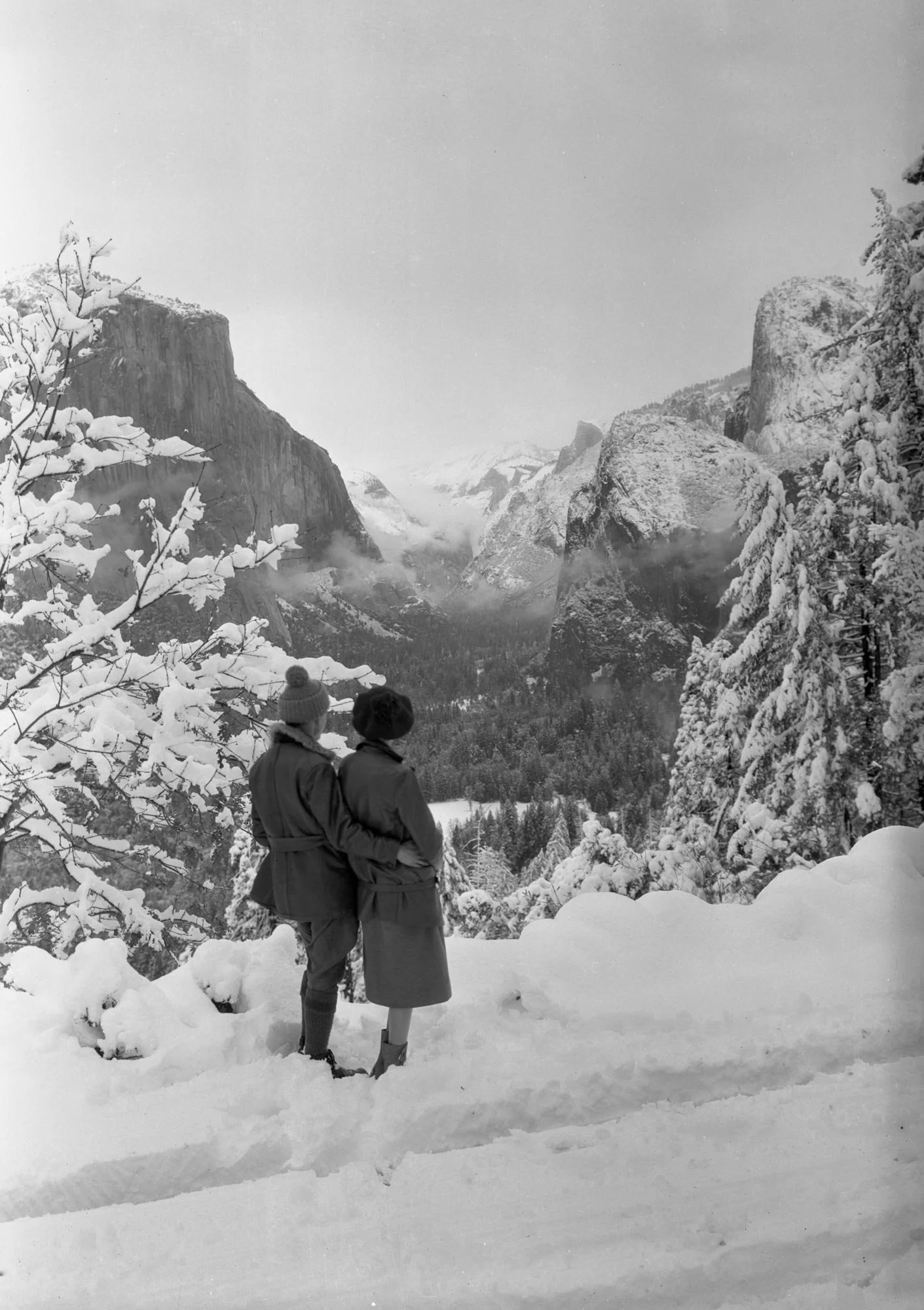
Snow scene of Yosemite Valley from near Tunnel View. NPS / Yosemite Archives
Most people experience Yosemite during the same half of the year.
Nearly three quarters of the park's visitation occurs between May and October. From 2010 through 2024, Yosemite averaged about 625,000 visitors in July and 121,000 in January. August alone accounted for roughly as many visits as January, February, March, and December combined.[1]
That concentration matters because Yosemite's roads, parking areas, trails, and visitor facilities absorb most of their annual demand during the same part of the year. National Park Service planning documents have identified peak-season congestion and heavy use as challenges for park operations and natural resources.[2]
Winter is Yosemite's quietest season, and the differences go well beyond crowd size. Snow closes roads and changes familiar trails. Glacier Point Road becomes a route for cross-country skiing. Snowshoes open access to places normally reached on foot. Badger Pass puts downhill skiing inside a national park better known for granite walls and summer hiking.
For someone who has already been to Yosemite, winter can make a familiar place feel new again.
Yosemite Visitation by Month
What Winter Is Actually Like in Yosemite
Photographs taken after a storm can give the impression that Yosemite Valley spends the winter buried under snow. At roughly 4,000 feet, conditions are more variable.
The National Park Service lists average winter temperatures in Yosemite Valley around 50°F during the day and 30°F at night. A storm may leave the Valley white, followed by warmer weather that melts much of the snow. Around 6,000 feet and above, snow is much more likely to remain on the ground through the season.[3] Snow can disappear quickly from the Valley floor while remaining across the surrounding high country. A storm can change conditions again within a few days.
Yosemite Valley and Wawona remain accessible by car throughout the year, weather permitting. Lodging and services continue operating in the Valley, and familiar places such as El Capitan Meadow, Yosemite Falls, and the Merced River remain within reach. Yosemite Falls generally begins flowing again as winter precipitation returns, though the biggest flows usually come with spring snowmelt.[4]
Crowds vary within the season. Christmas and New Year's can be busy, and February's Horsetail Fall phenomenon draws a concentrated audience of its own. Ordinary winter weekdays are another story. January and February together account for only about six percent of Yosemite's average annual visitation.[1]
That leaves more room for a day to develop without every decision revolving around parking or getting ahead of traffic.
A Different Way Into Yosemite
For many visitors, summer Yosemite revolves around hiking. Winter changes the available terrain and offers a reason to try something new.
Skiing has a surprisingly long history in Yosemite. The park's ski school dates to 1928, the first Upski was installed at Badger Pass in 1933, and the ski lodge opened in 1935. NPS describes Badger Pass as California's oldest downhill ski area.[5]
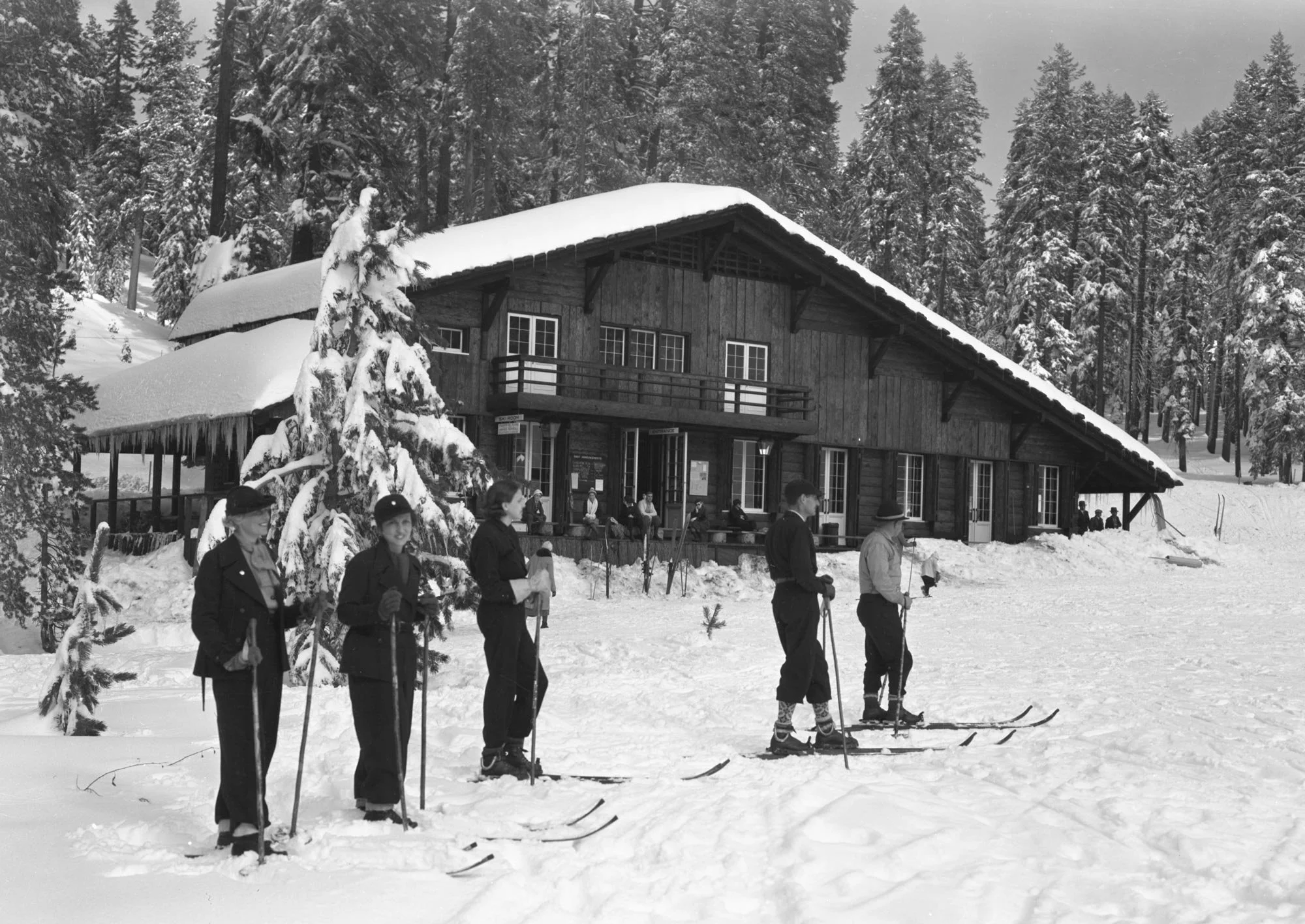
Skiers outside the Badger Pass Ski House, February 1936. Ralph H. Anderson / National Park Service, public domain.
Badger Pass remains a small ski area by Sierra standards, offering downhill skiing, snowboarding, lessons, and rental equipment during the winter operating season when snow conditions allow. For beginners, its modest size, lessons, and on-site rentals make it an approachable place to try skiing or snowboarding inside Yosemite itself. The same area provides an entry point into Yosemite's much larger Nordic trail system. Once Glacier Point Road closes to automobiles beyond Badger Pass, a road that carries sightseeing traffic in summer becomes a winter recreation route. Yosemite has about 90 miles of marked cross-country ski routes and 25 miles of groomed track, with equipment rentals and instruction available through the Nordic Center.[6]
Snowshoeing provides another way into the winter landscape. Yosemite Mountaineering School and Guide Service runs seasonal guided trips from Badger Pass, including introductory outings and longer routes toward Dewey Point. Current dates and offerings should be confirmed when planning a trip.[7] Yosemite Conservancy also runs winter naturalist programs and custom outings that can include winter hiking and snowshoeing.[8]
For someone who has looked at cross-country skis or snowshoes and wondered where to begin, these services remove some of the uncertainty. A first attempt can start with rented equipment, a lesson, or a guide rather than a major investment in equipment and experience.
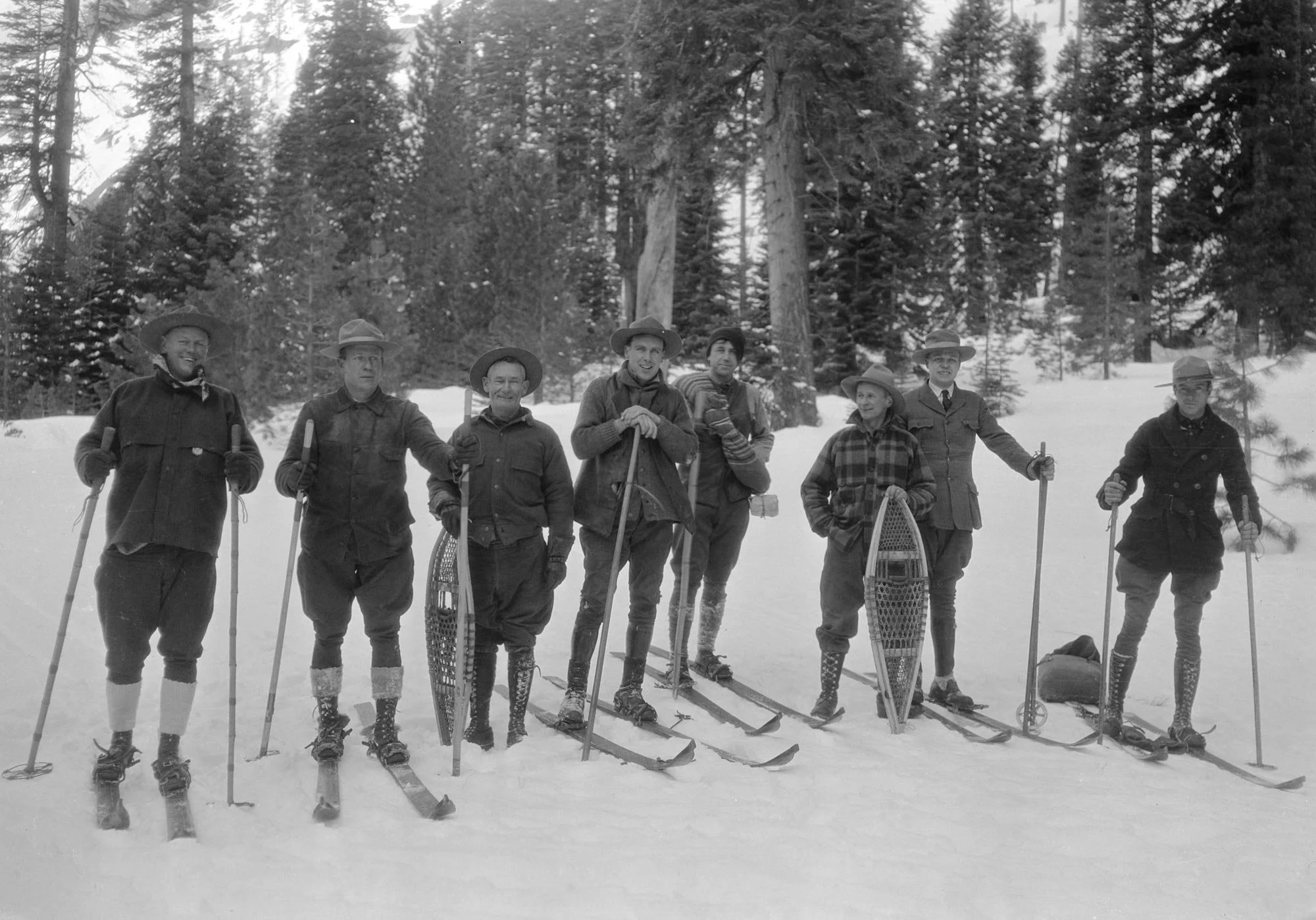
A ski party heads into Yosemite’s snow-covered High Sierra, 1926 or 1927. Stone / National Park Service, public domain.
A Winter Day in Yosemite Valley
A winter weekend can still revolve around Yosemite Valley.
El Capitan and Half Dome remain above the familiar meadows. Cook's Meadow, the Merced River, and portions of the Valley's lower-elevation trail system can be explored throughout the season, with snow and ice changing conditions from week to week.
Winter light changes the Valley too. Sunrise comes later, the sun sits lower over the Sierra, and storms can obscure the cliffs for hours before breaking apart. Fresh snow may last only briefly on the Valley floor, making the exact appearance of a winter trip difficult to predict.
Other winter traditions have developed around the Valley and Badger Pass. The outdoor ice rink at Curry Village operates seasonally, while ranger and naturalist programs vary throughout winter. Current schedules are worth checking before building a trip around any particular activity.
Where Winter Limits Access
Winter changes the parts of Yosemite that can be reached by car.
Tioga Road generally closes after significant autumn snowfall and remains closed until late May or June, depending on snowpack and spring plowing. The closure removes normal vehicle access to Tuolumne Meadows and Yosemite's eastern entrance.[3]
Glacier Point Road closes to cars beyond Badger Pass. That closure creates the Nordic route described above, but Glacier Point is no longer a drive-up destination. Reaching it in winter becomes a much more involved backcountry trip.
Mariposa Grove Road also closes seasonally. Visitors can reach the grove by walking roughly two miles each way on the road or Washburn Trail, gaining about 500 feet along the way. Snow and ice can make the route more difficult in winter.[9]
The high country requires another level of preparation. Deep snow can obscure summer trails, and winter backcountry travel may involve navigation, avalanche terrain, and rapidly changing weather. Trips beyond developed recreation areas need to be planned as winter mountain travel.
Visitors whose priorities are Half Dome, Tioga Pass, Tuolumne Meadows, or long high-country hikes will find better conditions during another season.
Winter has enough of its own to fill a trip.
Getting to Yosemite in Winter
Several western routes into Yosemite remain open year-round, but road conditions can change quickly during storms. NPS advises winter visitors to carry tire chains and check current conditions before traveling.[10]
Highway 140 through Mariposa and El Portal is particularly useful to know about. The highway follows the Merced River toward Yosemite Valley and stays lower than the park's other western approaches. NPS says chains are required less frequently on Highway 140 for that reason.[3]
All vehicles must carry chains when entering a chain-control area, including four-wheel-drive and all-wheel-drive vehicles. Depending on the level of chain control, AWD or 4WD vehicles equipped with qualifying snow tires may be exempt from installing them. Under R3 controls, chains are required on every vehicle.[10]
Highway 41 through Wawona and Highway 120 through Big Oak Flat are also year-round approaches when conditions allow. Both reach higher elevations on the way to Yosemite Valley, making weather an especially important part of route planning.
Yosemite Area Regional Transportation System (YARTS) provides year-round bus service into Yosemite Valley along Highway 140. Its 2026–27 winter schedule runs October 1 through May 28, giving travelers an alternative to driving into the park during winter conditions. Check the current timetable when planning your trip.[13]
A forecast checked a week before departure isn't enough. Road conditions, chain controls, and temporary closures should be checked again before leaving home.
Yosemite and Mammoth Are Not Winter Neighbors
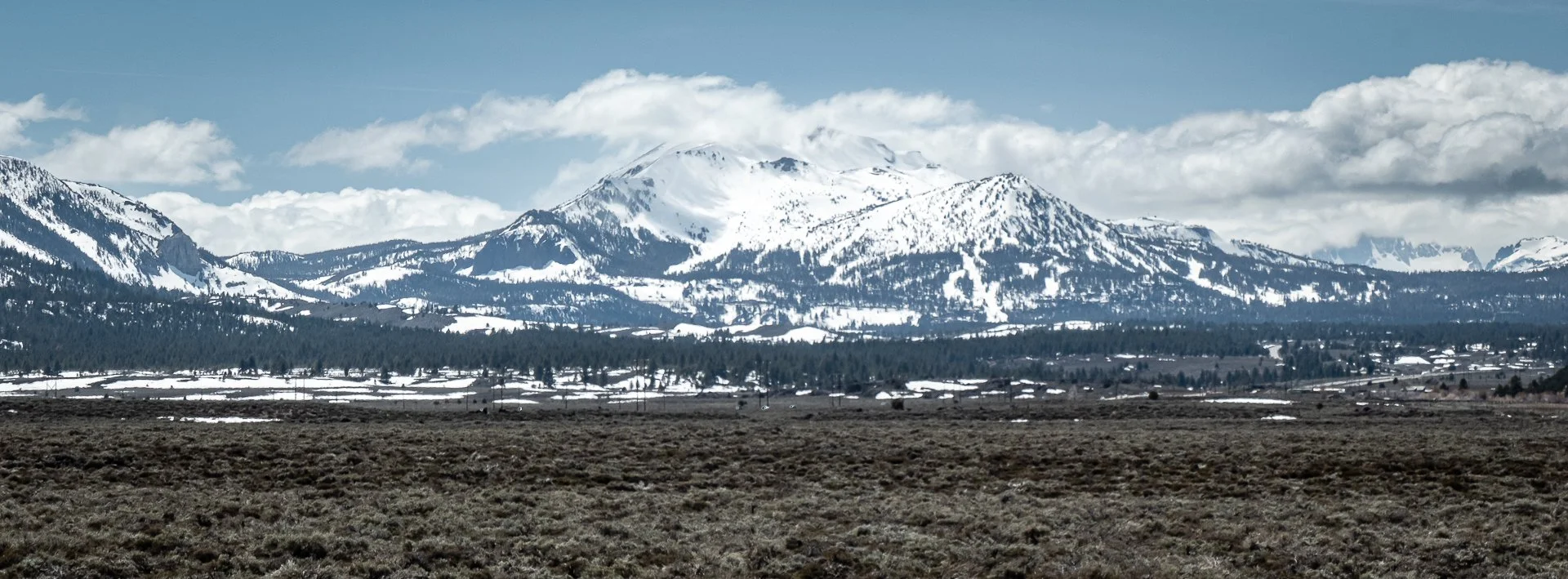
Yosemite and Mammoth Lakes look like natural additions to the same trip. During summer, they are. Tioga Road crosses the Sierra to Lee Vining and Highway 395, putting Mammoth within a relatively short drive of Yosemite.
The route closes for winter.
Sonora and Ebbetts passes farther north normally close as well, leaving Yosemite Valley and Mammoth on opposite sides of the Sierra without a nearby road connection. NPS estimates the winter drive from Mammoth Lakes to Yosemite at roughly 410 miles and eight hours when the seasonal passes are closed.[11]
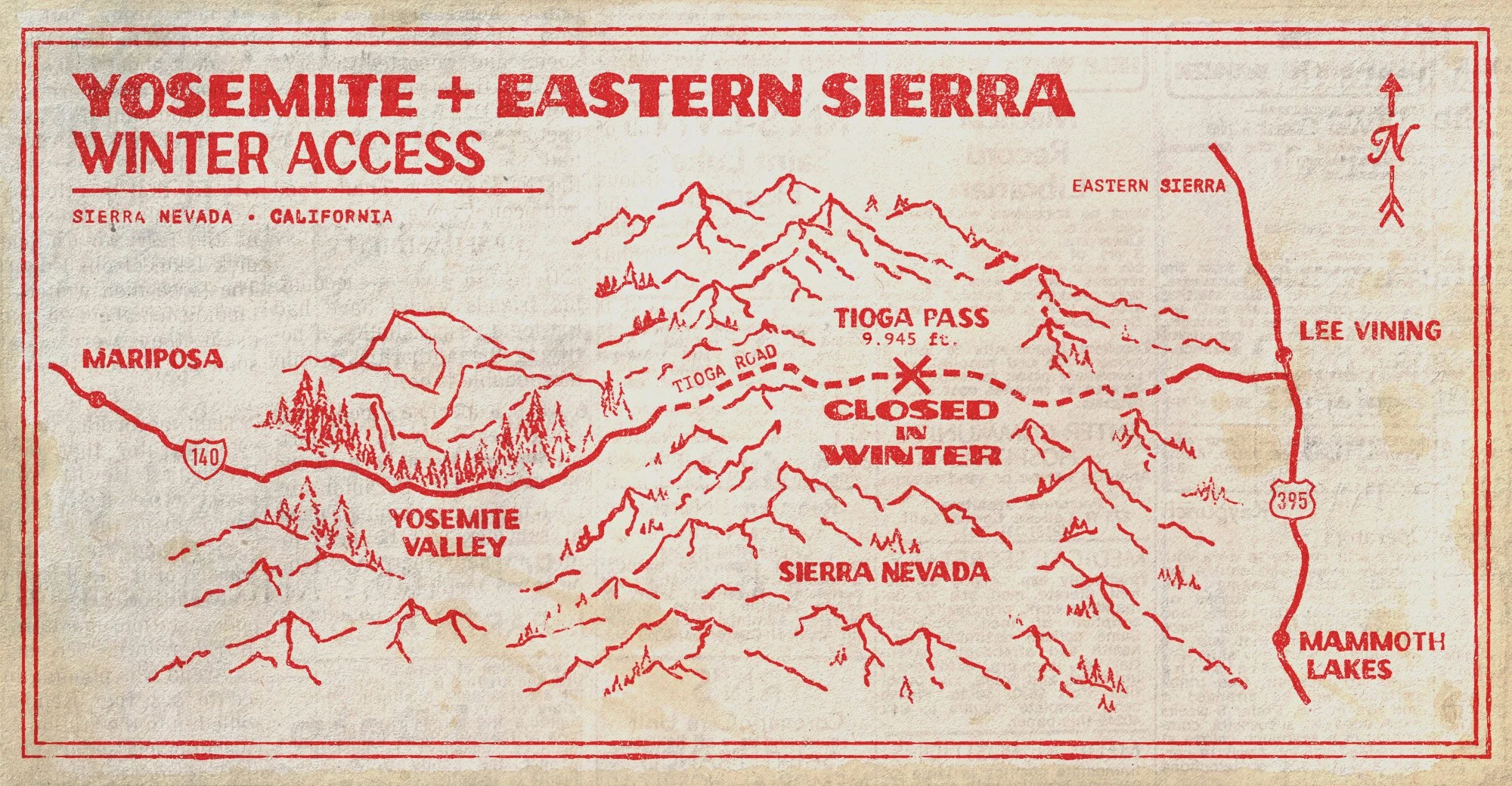
Tioga Road provides the direct summer connection between Yosemite and the Eastern Sierra. In winter, its seasonal closure separates Yosemite Valley from Lee Vining and Mammoth Lakes.
For travelers coming from Southern California, the distinction is important. Mammoth, Bishop, June Lake, and the rest of the Eastern Sierra remain accessible via Highway 395. Yosemite Valley is approached from the western side of the range.
A short summer connection becomes an all-day winter detour.
Visiting Outside Yosemite's Busiest Months
Yosemite's seasonal visitation pattern also has implications for the park itself.
NPS planning documents have connected periods of heavy visitation with traffic congestion, unauthorized parking, vegetation damage, human waste, strain on infrastructure, and difficulties maintaining park operations.[2] A 2024 U.S. Geological Survey study of Yosemite's giant sequoia groves documented visitor-associated soil compaction, vegetation loss, social trails, and resulting erosion concerns.[12]
Nearly 75 percent of Yosemite's visitors arrive between May and October.[1] Most annual visitor demand is therefore concentrated into the same six months.
Choosing January over July places a trip outside that period of greatest demand. Yosemite's own visitor-management planning has considered distributing visitation across different areas, times, days, and seasons as one way of addressing concentrated use.[2]
Winter visitors still use roads, parking, lodging, and park facilities, so changing the timing of a trip doesn't eliminate its impact. It does avoid adding another visit during Yosemite's busiest months, while opening up experiences that aren't available during summer.
Seeing Yosemite Again
A first visit to Yosemite can easily become a tour of places you've spent years seeing in photographs: Tunnel View, Yosemite Falls, El Capitan, Half Dome. Later trips tend to reach farther—to another trail, another overlook, another part of the high country.
Winter offers a different reason to return.
Glacier Point Road becomes a ski route. A pair of snowshoes can take you through a landscape you previously walked in hiking boots. Someone who has never skied can take a morning lesson at Badger Pass and be back in Yosemite Valley that afternoon. A storm can cover a familiar meadow overnight and be gone from the Valley floor a few days later.
For travelers with some flexibility, fewer crowds are reason enough to consider another season. The more interesting possibility is what you might do with it once you're there.
Continue Exploring
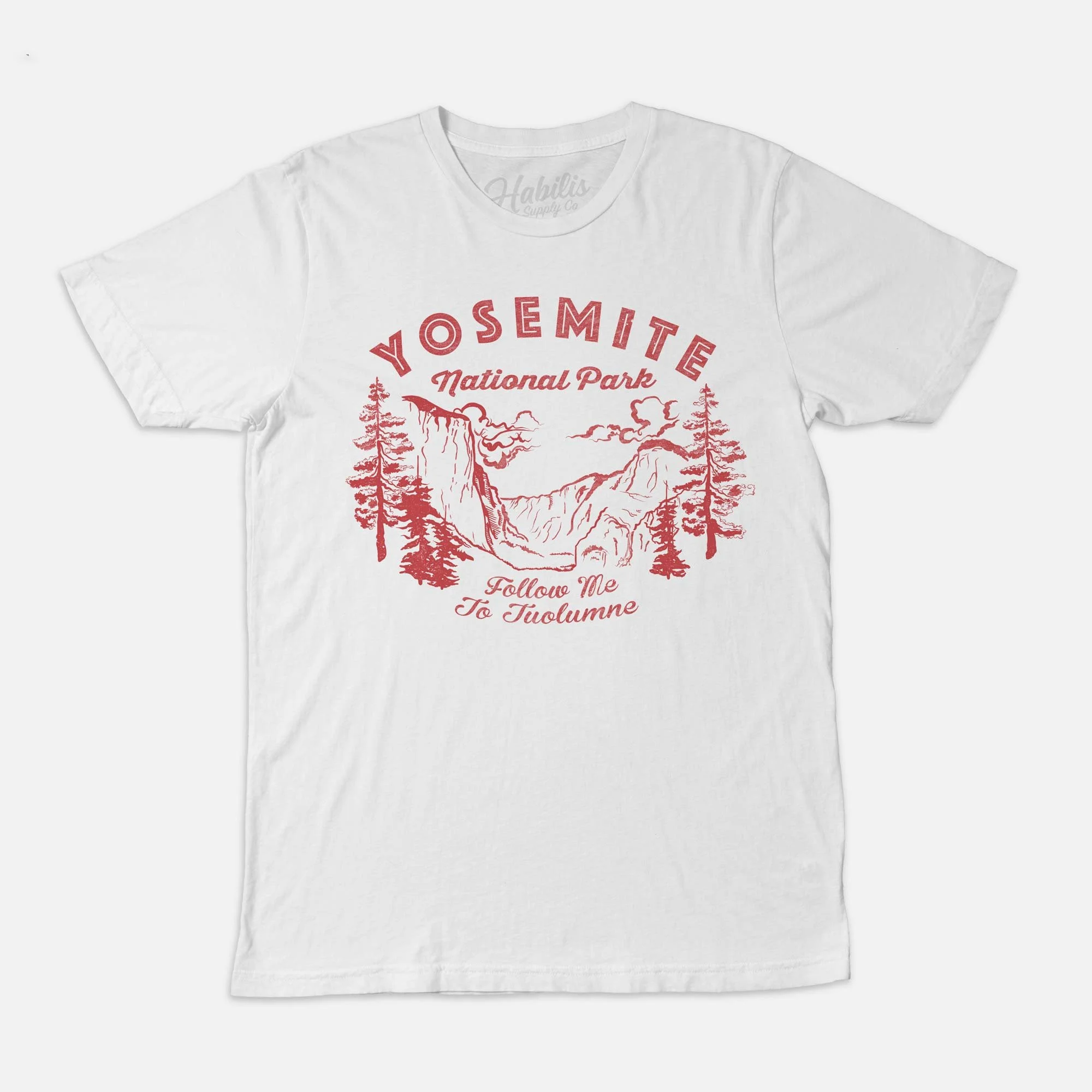
Winter can make even a familiar place feel different. Our original Yosemite artwork is rooted in the same landscape, designed as something to carry home and into everyday life.
Shop the Yosemite National Park Tee →
From Yosemite Valley to Mammoth Lakes, Mt. Whitney and the John Muir Trail, explore more artwork inspired by California's high country.
Sources
National Park Service — Yosemite Visitation Statistics
Monthly and annual Yosemite visitation dataNational Park Service — Visitor Access Management
Yosemite visitor-management planningNational Park Service — Winter FAQ
Winter conditions and access in YosemiteNational Park Service — Yosemite Falls
Yosemite Falls informationNational Park Service — Badger Pass Ski Area
Badger Pass history and winter recreationBadger Pass Nordic Center — Cross-Country Skiing
Cross-country skiing at Badger PassYosemite Mountaineering School — Snowshoeing
Guided snowshoe trips from Badger PassYosemite Conservancy — Winter Adventures
Guided winter naturalist tripsNational Park Service — Mariposa Grove
Mariposa Grove access and seasonal conditionsNational Park Service — Tire Chains and Winter Driving
National Park Service — Winter Roads
Winter road closures and driving routesU.S. Geological Survey — Yosemite Visitor-Use Impacts
USGS visitor-impact researchYosemite Area Regional Transportation System — Highway 140
2026–27 winter schedule and Yosemite Valley service